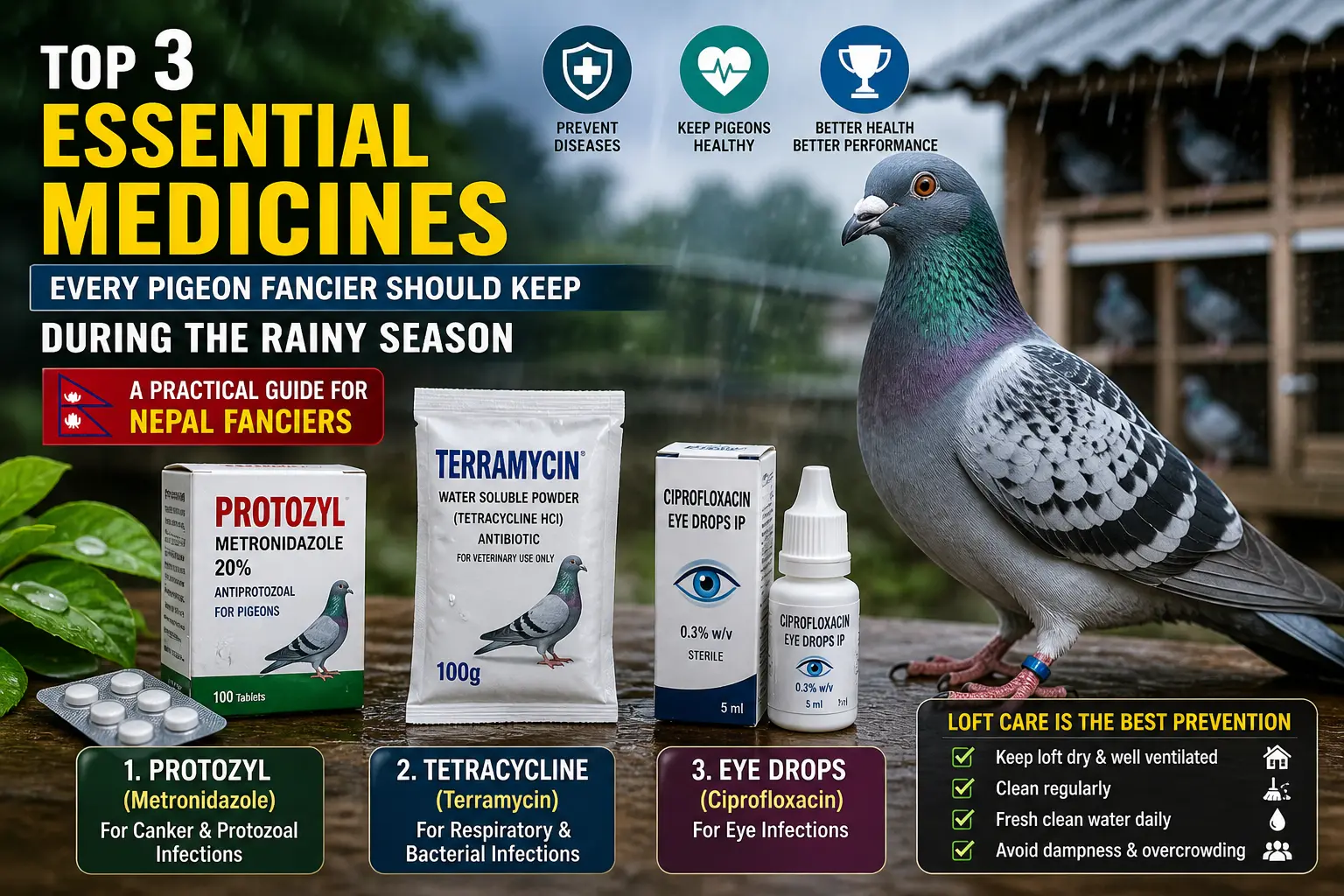
1. Protozoal Treatment (Protogyl / Metronidazole-based products)
Protozoal infections, especially Trichomoniasis (Canker or Frounce), are one of the most common health problems in pigeons in Nepal. These infections become more frequent during rainy season, stress periods, breeding, and highflyer tournament preparation.
In Nepal, many fanciers use human pharmacy medicines, especially:
- Protogyl / Protozyl syrup
- Metronidazole tablets (DF or other generic brands)
These are originally human medicines used for gastrointestinal and protozoal infections, but they are widely used in pigeon keeping due to easy availability in local pharmacies.
What is Protogyl?
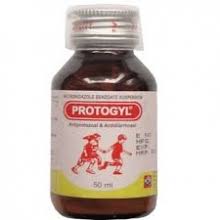
Protogyl is a human pediatric oral suspension (syrup) commonly used for:
- stomach infections
- gas / gastrointestinal imbalance
- protozoal or anaerobic gut infections in humans
In pigeon practice, it is used off-label for controlling protozoal infections (mainly canker).
Medicines Used
1. Protogyl / Protozyl (Syrup form)
- Human pediatric syrup available in pharmacies
- Used in drinking water for loft-wide treatment
- Easy to administer for group medication
2. Metronidazole (DF tablets / human generics)
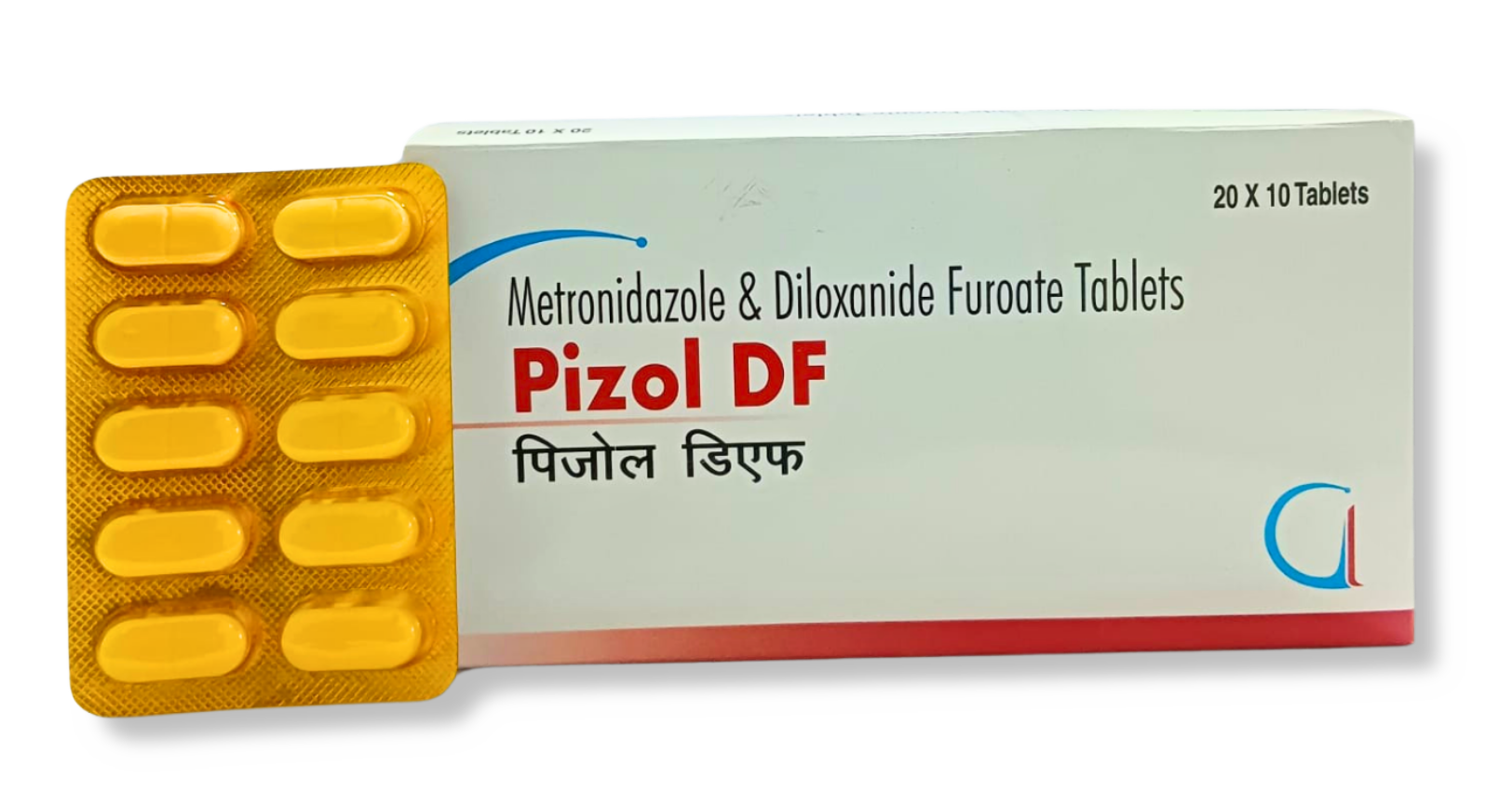
- Human pharmacy tablets
- Used for both individual and loft treatment
- Can be dissolved or given directly
How These Medicines Are Used in Loft Practice
🟡 1. Loft-wide treatment (Protogyl or tablet water method)
There are two accepted loft-wide approaches:
A. Syrup method
- Mixed in drinking water
- Given to entire loft
- Duration: 4–5 days total treatment cycle (commonly practiced range)
B. Tablet water method (alternative)
- Tablets are crushed and fully dissolved in drinking water
- Given to entire loft
- Water replaced daily
✔️ Both methods are used in Nepal loft practice depending on availability and preference.
🔵 2. Individual treatment (Metronidazole tablets)
Used for clearly affected birds:
Method options:
- Direct tablet administration
- OR tablet dissolved in water and given using syringe
✔️ Syringe method is commonly used when:
- bird is weak
- bird is not eating properly
- precise intake is needed
Important Treatment Principle
✔️ Full treatment duration
- Standard practical course: 4–5 days
- Even if birds look normal, course should be completed
👉 Reason:
Protozoa may remain hidden even after visible symptoms disappear.
Loft Management Approach
Practical Interpretation
🔹 Preventive / early stage approach:
- Identify and isolate clearly sick birds early
- Treat them individually if possible
🔹 Outbreak / risk situation:
- Treat entire loft to prevent silent spread
Important Precautions
- Do not stop treatment early even if birds look normal
- Ensure birds are drinking properly during water medication
- Maintain strict hygiene (drinkers, feeders)
- Avoid unnecessary repeated courses without reason
- Do not combine multiple strong antibiotics without understanding interaction
Common Mistakes to Avoid
- Stopping medication too early when symptoms disappear
- Random dosing without proper measurement
- Ignoring asymptomatic carriers
- Over-reliance on medication without hygiene control
- Treating without assessing loft condition first
Conclusion
Protogyl (syrup form) and Metronidazole tablets are widely used human pharmacy medicines in Nepal pigeon keeping for controlling canker (protozoal infection).
- Syrup form is mainly used for loft-wide treatment
- Tablets are used for individual or targeted treatment
- Syringe administration of dissolved tablets is also a practical field method
A full treatment cycle of 4–5 days is commonly followed in practice, and completion of the full course is important even if birds appear normal.
The best results come not just from medication, but from timing, hygiene, and correct application strategy.
2. Respiratory & Bacterial Infection Treatment
(Tetracycline / Terramycin-type medicines)
Introduction
Respiratory and bacterial infections are common problems in pigeons, especially during rainy season, sudden weather changes, dust exposure, and stress periods related to highflyer tournaments in Nepal.
These infections can affect the respiratory system, eyes, energy level, and flight performance, often leading to reduced stamina and weak recovery.
In Nepal pigeon keeping, fanciers commonly use tetracycline-group antibiotics such as NDox powder (veterinary formulation) and Terramycin-type tablets. In addition, some human pharmacy antibiotics from the same drug family (like doxycycline and oxytetracycline) are also used depending on availability.
Medicines Used
1. NDox (Powder form – Veterinary supply)
- Broad-spectrum antibiotic powder
- Commonly used for loft-wide treatment through drinking water
- Preferred for group medication during early or mild outbreaks
2. Tetracycline / Terramycin-type tablets (Veterinary use)
- Tablet form antibiotic
- Used mainly for individual bird treatment
- Suitable for clearly infected or weak pigeons
Shared-Use Antibiotics (Human + Veterinary availability)
Some antibiotics in this group are available in both human and veterinary pharmacies:
🟡 Doxycycline
- Member of tetracycline family
- Available in human pharmacies
- Sometimes used in pigeon practice depending on availability
🟡 Oxytetracycline
- Tetracycline-class antibiotic
- Available in both human and veterinary markets
- Used in poultry and pigeon practice based on field experience
👉 These are not “alternatives” in different categories — they belong to the same antibiotic family, just sourced differently.
How These Medicines Are Used in Loft Practice
🟡 1. Loft-wide treatment (NDox or water method)
Used when:
- multiple birds show mild respiratory signs
- weather changes trigger early infection
- prevention is needed during high-risk periods
Method:
- Mixed in drinking water
- Given to entire loft
- Water replaced daily during treatment
✔️ Purpose:
- Control infection spread early
- Stabilize loft condition
🔵 2. Individual treatment (Tetracycline tablets)
Used when:
- specific birds show strong symptoms
- birds are weak, slow, or clearly infected
Method:
- Tablet given directly to individual bird
- Ensures more accurate targeted treatment
✔️ Purpose:
- Treat severe or clearly infected pigeons
- Avoid unnecessary medication in healthy birds
🟠 3. Loft-wide tablet method (alternative practice)
In some loft setups:
- Tablets are crushed and dissolved in drinking water
- Used when NDox powder is not available
✔️ Field note:
- Requires proper mixing to avoid uneven dosage
- Water intake must be consistent across birds
Treatment Duration (Field Practice)
- Typical course: 3–5 days depending on severity
- Should not be stopped early even if birds improve quickly
- Completing the full course helps prevent relapse
Important Treatment Principles
- Respiratory infections often return if loft hygiene is poor
- Medication works best with:
- clean drinking water
- proper ventilation
- reduced dust and stress conditions
- Avoid unnecessary combination of multiple antibiotics
Correct Loft Management Approach
In Nepal highflyer practice, both strategies are used depending on situation:
- Early stage or risk condition → loft-wide treatment
- Clear visible cases → individual treatment
👉 The correct approach depends on:
- severity of symptoms
- number of affected birds
- speed of spread in loft
Common Mistakes to Avoid
- Overusing antibiotics without clear reason
- Stopping treatment early when birds look normal
- Incorrect mixing of water medication
- Treating without improving loft hygiene
- Repeated unnecessary antibiotic cycles
Conclusion
Tetracycline-based medicines, NDox powder, and related antibiotics are widely used in Nepal pigeon keeping for managing respiratory and bacterial infections, especially during rainy season and highflyer tournament preparation.
- NDox powder is mainly used for loft-wide treatment
- Tetracycline tablets are used for individual treatment
- Doxycycline and oxytetracycline (available in human pharmacies) belong to the same antibiotic family and are sometimes used depending on availability
Successful treatment depends not only on medicine, but also on timing, hygiene, and correct application strategy.
3. Eye Infection Treatment
(Ciprofloxacin Eye Drops)
Introduction
Eye infections are a common issue in pigeons, especially during rainy season, dusty loft conditions, overcrowding, and respiratory infections that spread to the eyes.
In Nepal pigeon keeping, fanciers commonly use Ciprofloxacin eye drops, a human pharmacy medicine, for treating bacterial eye infections in pigeons.
These drops are easily available in local pharmacies and are widely used due to their effectiveness against bacterial conjunctivitis and secondary eye infections.
What is Ciprofloxacin Eye Drop?
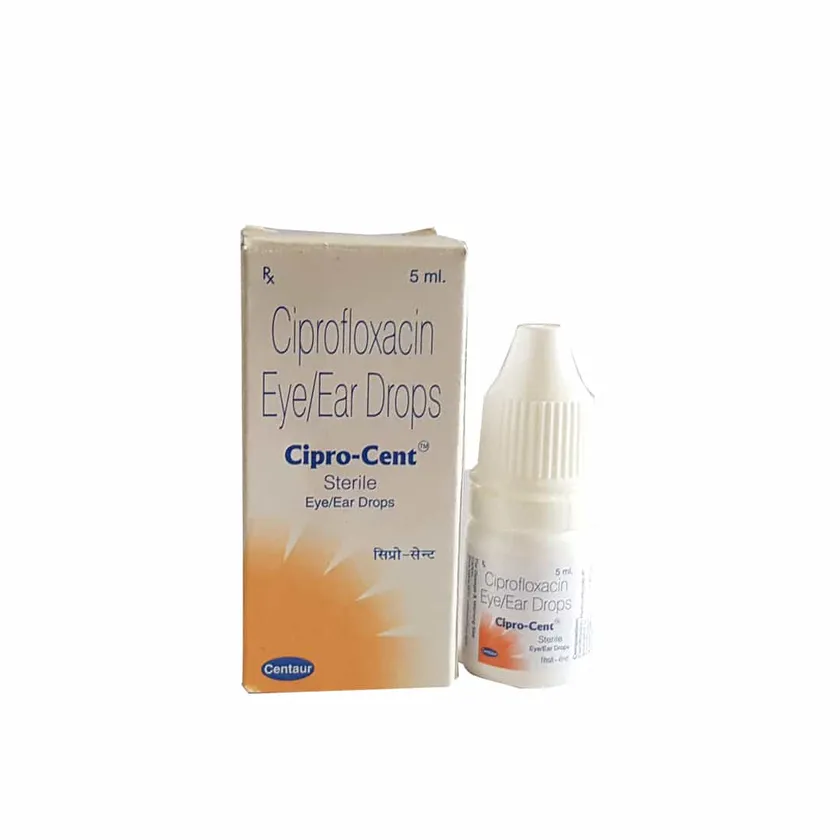
Ciprofloxacin is a broad-spectrum antibiotic eye drop belonging to the fluoroquinolone group.
In pigeons, it is mainly used for:
- bacterial eye infections
- conjunctivitis (red or swollen eyes)
- discharge from eyes due to infection
- secondary infections linked with respiratory disease
Common Eye Infection Signs in Pigeons
- Red or swollen eyes
- Watery or sticky discharge
- Eyes partially closed
- Dirt or crust formation around eyelids
- Sensitivity to light
- Reduced activity or flight performance
How Ciprofloxacin Eye Drops Are Used in Loft Practice
🟡 1. Direct eye application
This is the most common method.
Method:
- 1–2 drops applied directly into affected eye
- Usually repeated 2 times daily depending on severity
- Clean eye area gently before application if discharge is present
✔️ Purpose:
- Directly control bacterial infection at source
- Reduce swelling and discharge
🔵 2. Loft observation approach
In loft practice:
- Only affected birds are treated
- Other birds are monitored closely
- If multiple cases appear, check for underlying respiratory infection
Treatment Duration (Field Practice)
- Typical course: 3–5 days
- Treatment should continue until symptoms fully resolve
- Even if improvement is seen early, short continuation is preferred
Important Treatment Principles
- Eye infections are often secondary infections, not isolated problems
- Clean loft conditions are important to prevent recurrence
- Respiratory disease can sometimes trigger repeated eye infections
- Avoid touching droppers directly to the eye to prevent contamination
Common Mistakes to Avoid
- Stopping treatment too early when eyes look normal
- Using same dropper for multiple birds without cleaning
- Ignoring underlying respiratory infection
- Treating eyes only without checking loft hygiene
- Overusing antibiotics unnecessarily
Practical Loft Insight (Nepal highflyer context)
In Nepal pigeon practice:
- Ciprofloxacin eye drops are used as a first-line treatment for bacterial eye infections
- Most cases improve quickly when:
- infection is caught early
- loft hygiene is maintained
- respiratory causes are controlled
Conclusion
Ciprofloxacin eye drops are a widely used human pharmacy antibiotic eye treatment in Nepal pigeon keeping for managing bacterial eye infections.
When used correctly, they are highly effective for:
- conjunctivitis
- eye discharge
- infection-related swelling
However, long-term success depends on identifying and controlling the root cause, which is often linked to loft hygiene or respiratory infection.
Final Professional Note
While these practices are widely used in Nepal’s pigeon community, correct diagnosis is still the most important factor. Misuse or overuse of antibiotics can reduce effectiveness over time and affect long-term loft health.
Always consult an agro-vet or qualified veterinarian for precise dosage based on the product you are using.