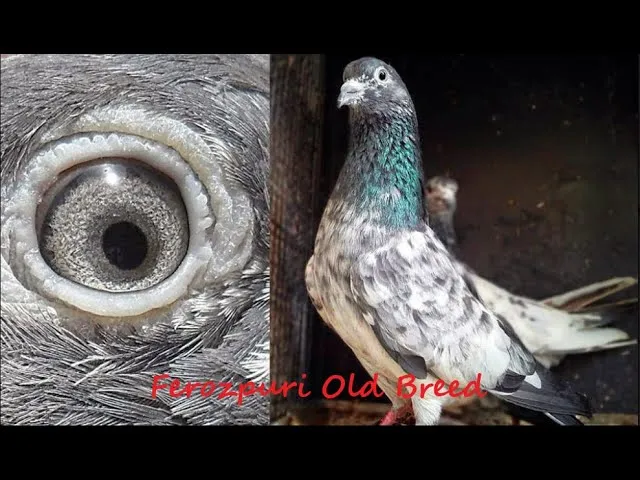
Firojpuri Pigeon: Complete Guide to Eye Traits, Identification & Breeding
Firojpuri pigeons are one of the most unique and widely discussed strains among pigeon fanciers in South Asia. Unlike many other pigeons that are identified by body structure or color, Firojpuri pigeons are famous for one defining feature—their distinctive “Firozi” (turquoise) eye.
In this article, we will break down the true identity, characteristics, breeding logic, and practical insights of Firojpuri pigeons in a way that is useful for both beginners and experienced breeders.
🕊️ What is a Firojpuri Pigeon?
The term “Firojpuri” is often misunderstood.
Many people assume it comes from a place like Firozpur, but in reality:
👉 The name comes from “Firozi” (turquoise)—referring to the eye color of the pigeon.
In simple terms:
Firojpuri = A pigeon identified by its turquoise (Firozi) eye
👁️ The Most Important Feature: Eye
The eye is everything in Firojpuri pigeons.
A true Firojpuri should have:
- Bright turquoise/blue-toned eye
- Clean and clear iris
- Strong visual appeal
- Matching tone with overall face expression
Additional details:
- The eye ring should also reflect similar tone
- Dull or mixed eyes often indicate crossbreeding
👉 Key rule:
If the eye is not correct, the pigeon is not a true Firojpuri—no matter how good it looks.
🎨 Colors and Variations
One of the most important things to understand:
👉 Firojpuri has NO color restriction
You can find Firojpuri pigeons in:
- Slate (grey)
- Red
- Golden-neck (Aatshi type)
- Patterned (Jaldar)
- Mixed colors
- White-based variations
Even newly named types like:
- “Tiger print” (white with spots)
👉 Important:
Color does not define the breed—the eye does.
🧱 Structure & Body Traits
Although not the main identifier, a good Firojpuri usually has:
- Balanced body structure
- Clean head
- Proportional size
- Elegant posture
⚠️ However:
- Structure can be misleading
- Many crossbred pigeons may look like other breeds (e.g., Teddy)
🔍 Firojpuri vs Other Breeds (Quick Insight)
- Firojpuri is identified by eye
- Breeds like Teddy are identified by body structure
👉 Example:
A pigeon may look like Teddy from a distance,
but when checked closely (especially eye), it turns out to be Firojpuri or a cross.
🧬 Breeding & Genetics
Firojpuri pigeons are part of a dynamic and evolving breeding system.
Common Practices:
1. Crossbreeding
Breeders often mix Firojpuri with:
- Teddy
- Rampari
- Fakir Gul
- Other local strains
👉 Result:
- New types and variations
- New names assigned by breeders
2. Line Breeding
- Used to strengthen the Firozi eye trait
- Rebreeding into Firojpuri improves:
- Eye clarity
- Color intensity
⚠️ Important Insight
Crossbreeding may preserve the eye but:
- Changes body structure
- Creates a new strain (not pure Firojpuri)
⚖️ Pure vs Crossbred Firojpuri
✅ Pure Firojpuri
- Strong, clear Firozi eye
- Consistent traits across generations
- Recognizable identity
❌ Crossbred
- Slightly off eye color
- Mixed body structure
- Traits leaning toward another breed
👉 Expert breeders can identify crosses instantly—often just by looking at the eye.
🏷️ Naming & Strain Reality
One of the most important realities in pigeon breeding:
- Many strains are created by breeders
- After crossing and stabilizing traits:
- Breeders assign their own names
👉 Example:
- “Tiger print”
- “Grey Parrot Chandakhani”
👉 Key insight:
The same pigeon may have different names depending on the breeder.
💰 Market Value
Firojpuri pigeons are valued mainly based on:
- Eye quality (most important)
- Purity of line
- Rarity
- Breeder reputation
👉 Two pigeons with similar color:
- The one with better eye can be much more expensive
📌 Final Thoughts
Firojpuri pigeons stand out because they break the usual rules of pigeon identification. Instead of body or color, everything depends on the eye.
However, due to heavy crossbreeding in the market, true Firojpuri pigeons can be difficult to identify for beginners.
If you understand the eye, you understand the breed.
🔎 Quick Summary
- Defined by: Firozi (turquoise) eye
- Color: Not important
- Structure: Secondary
- Highly influenced by crossbreeding
- Eye quality determines value
Firojpuri is not just a pigeon—it’s a strain that tests a breeder’s observation, patience, and understanding of genetics.